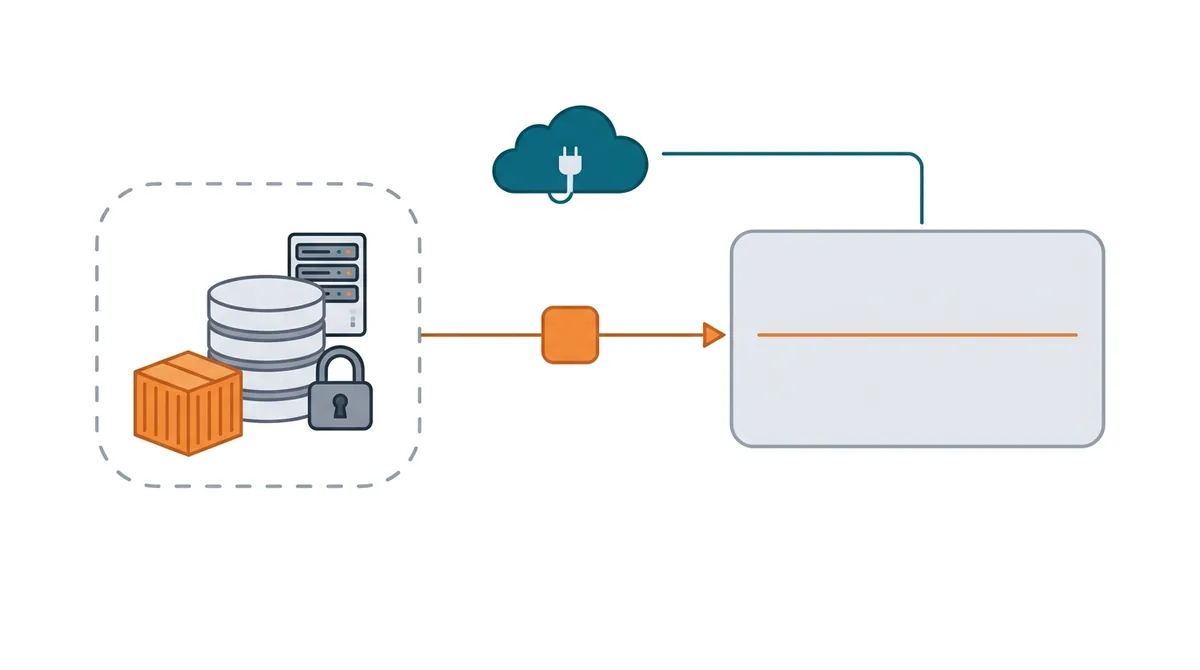
Before it can mean anything, a card needs its number. There are two ways in.
Two ways in: a container next to the data sends only the summed values out, and the passwords stay inside; or Dashbox calls a public API itself.
For a service with a public API, Dashbox calls it itself: a template says how that API is read, a key is stored encrypted in Dashbox, and the collector fetches on its interval, every 15 minutes by default. No code and no server of your own.
For data that needs local access - a database on an internal network, a server reached over SSH - a small container runs next to the data, works out the numbers there and pushes them in. The passwords stay where the data is. Dashbox never sees them, and only the summed values arrive, never the rows behind them.
When an API gives only a running total or a level, Dashbox works out the daily values and the averages from the readings it has stored.
In the example month
An example, not real data.
Every day
The sign-ups card is read by an API collector every 15 minutes. The source has months of history, so the card has its full normal from the first day.